Early this week, a dog was discovered to be infected with the rabies virus in Chicago. Contracting rabies is very rare; in fact, the last known case in Illinois of a dog infected with rabies was in 1994, according to the Illinois Department of Public Health (IDPH). The IDPH further reports that the last known case of dog rabies infection in Cook County, IL, was before 1964. So, indeed rare among the pet population. The bat population is the current reservoir for rabies, so be sure to report any bat bites or bats in the home to trained professionals, and they can provide guidance in addition to capture.
Given the very serious nature of rabies infection, as it is nearly 100% fatal for humans and animals once it reaches the behavioral stage (meaning the brain has been compromised), we’ve put together a list of frequently asked questions that may be helpful. Routine vaccinations are still safe and effective. We have much to learn in this case, including further genetic testing on the virus isolated in this case, which may help determine where and how the animal was infected. If you happen to have a dog that is from Florida and brought to Chicago, you should contact your veterinarian for further advice. If you remain concerned, you are advised to boost your pet’s rabies vaccination.
FAQ:
Q1. Is my pet in danger?
It is unlikely that your pet is in immediate danger. Those animals who were in contact with the infected dog at a doggy day care have been notified. The rabies vaccination is extremely effective. The number of cases of rabies in vaccinated dogs is extremely small. In a 20-year study of rabid dogs, less than 1% of rabies-positive dogs could be ascribed to true vaccine failure.
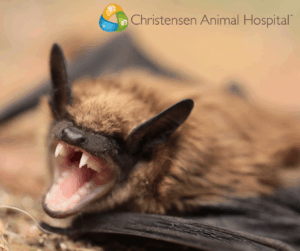
The biggest reservoir of rabies in Illinois is within the bat population. If you suspect a bat in your home, always contact a trained professional for removal. If the bat were to test positive for rabies, your family and pet would be directed on post exposure prophylaxis treatment. Rabies is transmitted via bite of an infected animal or saliva into an open wound or mucous membrane. Bat bites are so small that they can often go unnoticed. This is why testing any bat in the home is so important.
Q2. If my pet gets it, what do I look for?
There are 2 forms of rabies. They are known as the Furious (encephalitic) and Dumb (paralytic) forms. As the names imply, pets can become extremely aggressive or extremely lethargic. Any sick pet should be seen by a veterinarian.
Following a bite from an infected source, it can take 3 weeks, but up to 24 weeks, for symptoms to show. Prior to symptoms showing, the disease may be treatable.
Symptoms of rabies include: anxiousness/nervousness, aggression, incoordination, disorientation, muscle tremors, hypersalivation, and progress to seizures, coma, and death. Once symptoms of rabies show, the disease has infected the brain, and there is no longer any treatment available.
Q3. How do I know if I get it?
Rabies is nearly 100% fatal once symptoms arise. Any sick pet should be seen by a veterinarian. Anyone bitten by an animal should seek medical attention immediately. This is especially true if the animal’s vaccination status cannot be ascertained. Any dog, cat, or ferret that bites a human should be evaluated by a veterinarian as soon as possible. This is a legal requirement under Cook County law, as well as Illinois State law.
Q4. How do I protect my family?
The best protection against rabies comes from avoiding wildlife interactions. If you encounter any abnormal wildlife in the outdoors, or any wildlife inside a home, always leave the animal alone, contact a trained professional, and never try to approach or handle the animal on your own. Post-exposure prophylaxis for a human exposed to the rabies virus via a bite is extremely effective at preventing infection, but treatment must be started immediately.
Make sure to keep your pets vaccinated. The vaccine must be administered by a licensed veterinarian. If your pet is bitten by another animal, you may want to consider a rabies vaccine booster for added protection.
Q5. How did this dog, who was vaccinated, get it?
We do not yet have all the facts regarding the timing of this dog’s rabies exposure, nor the level/severity of his exposure. More information on this will come with time, which will help us explain how this dog was affected despite a rabies vaccination history.
Possible reasons may include: 1) A clerical error may have occurred, and the animal was actually not vaccinated as indicated. 2) A true vaccine failure occurred. The vaccine was actually ineffective in that animal. There are many reasons this could occur. The major one would be the animal’s inability to mount an appropriate immune response to the vaccine (immunosuppression or concurrent illness), though far less likely than the first possibility.
Q6. Why do I bother vaccinating if it doesn’t help?
The rabies vaccination remains fundamental disease prevention and post-exposure treatment. It is also required for any companion animal. If an exposure to rabies is suspected/confirmed, repeating the vaccination will be the recommendation for your pet. We strongly recommend all pets maintain their current vaccination status at all times. As evidenced by many medical journals, countless studies over decades, the rabies vaccine, when properly administered on schedule, is effective.
Contributions by:
Jeffrey Moll, DVM
Jennifer Cichon, DVM
Edited by:
Linn Lockhart, Practice Manager